The limestone bedrock across Peterborough Ontario is deceptive. Up top, you will find stiff glacial till, but drive ten minutes toward the Otonabee River floodplain and the profile shifts to compressible organic silts and soft clays that cannot handle conventional footings. We see this contrast every week in our lab. When a contractor hits those lacustrine deposits near Little Lake or along the Trent-Severn Waterway, the standard response becomes a ground improvement strategy built around stone column design. Instead of deep excavation and replacement, we install compacted gravel columns through the weak layer, transferring load to a more competent stratum and accelerating drainage of excess pore pressure. Before mobilizing the vibroflot, our team relies on field data from in-situ permeability testing to estimate consolidation time, and we often pair that with CPT logging to pinpoint the exact depth of the compressible horizon. In a city where winter frost can reach 1.5 meters, getting the column length and gradation right from the start avoids costly spring heave repairs.
A well-designed stone column in the Otonabee floodplain cuts primary settlement time from years to weeks, and that timeline matters when you are building against a Peterborough winter.
Scope of work in Peterborough Ontario
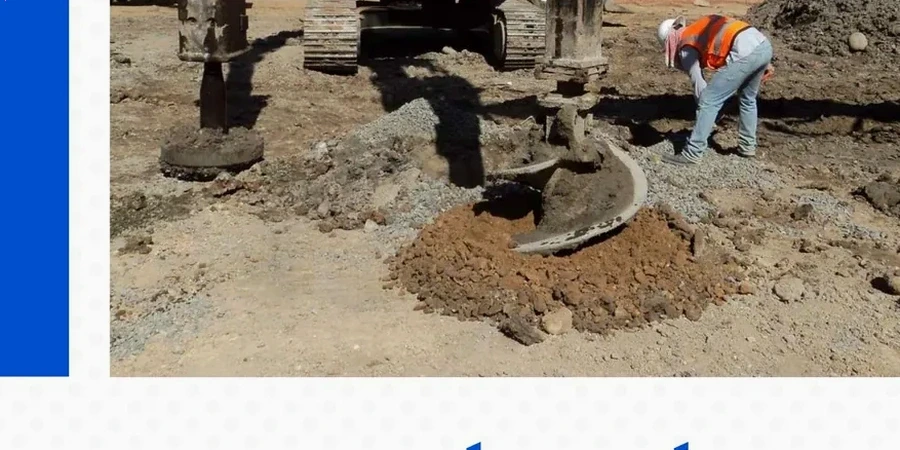
Critical ground factors in Peterborough Ontario
The most common mistake we see in the Peterborough area is treating stone columns as rigid piles. A local contractor will skip the site-specific settlement analysis, assume a generic spacing, and then wonder why the floor slab cracks two winters later. In the silty clays south of Lansdowne Street, lateral confinement is lower than what textbook curves predict, and without a proper unit-cell model the column can bulge excessively at mid-depth. That failure mode is silent until the structure is occupied. We have also encountered projects where the designer ignored the seasonal high water table, installing columns without a working platform, which led to contamination of the stone backfill with mud before compaction was achieved. A slope stability check becomes essential when columns are placed near a riverbank or an excavation, because the vibroflot energy can trigger a localized failure in sensitive soils during installation. Simple step: always run a trial column, exhumate it, and confirm the diameter before committing to the production grid.
Our services
Our stone column design work in Peterborough Ontario is supported by a full geotechnical investigation and verification program. We keep the same team from the initial borehole through to the post-treatment proof test, which eliminates the handoff errors that delay tight construction schedules.
Stone Column Design Package
Unit-cell settlement analysis, column spacing and diameter specification, aggregate gradation requirements per CSA A23.3, and installation sequencing for vibro-replacement or bottom-feed methods. Includes consolidation curves for the untreated and treated soil profile.
Post-Installation Verification
Plate load testing on individual columns and column groups, cross-hole CPT profiling between columns to confirm density gain, and sieve analysis of backfill samples to verify permeability targets. We issue a signed compliance report referencing NBCC bearing capacity criteria.
Common questions
How much does stone column design cost for a project in Peterborough Ontario?
For a typical commercial or light industrial building on soft ground in Peterborough, the design and verification package ranges from CA$1,770 to CA$7,390. The scope includes the geotechnical model update, unit-cell settlement analysis, column layout drawings, aggregate specification, and one day of plate load testing. Site-specific variables like access constraints, depth of the compressible layer, and the number of trial columns will move the fee within that range. We can supply a fixed-price proposal once we review the existing borehole logs or complete our own investigation.
What soil conditions in Peterborough make stone columns a good choice?
Stone columns work well in the soft silty clays and organic silts found in the floodplain areas near the Otonabee River and Little Lake. These deposits typically have undrained shear strengths between 15 and 40 kPa, which is too weak for shallow footings but sufficient to supply lateral confinement to a compacted gravel column. The method also accelerates drainage, reducing the months-long settlement that would otherwise occur under a preload fill. Where the glacial till is shallow, we may switch to a rigid inclusion, but in the deeper soft zones stone columns are often the most cost-effective solution.
How do you verify that the stone columns are performing as designed?
Verification starts during installation with real-time recording of amperage, depth, and stone consumption per column. After curing, we run plate load tests on at least one column per area and often on a group of three to capture group efficiency. We also push CPT soundings midway between columns to confirm the density increase in the surrounding soil. Back in the lab, we run a grain-size analysis on the delivered aggregate to check it matches the specified permeability and gradation. All results are compiled into a compliance report that the structural engineer can reference for the foundation sign-off.
Can stone columns be installed in winter in Peterborough?
Yes, but winter installation in Peterborough Ontario requires extra preparation. The working platform must be stripped of frozen crust and built up with free-draining granular fill to prevent the vibroflot from freezing overnight. We also heat the aggregate stockpile and monitor the column top for frost penetration before the plate load test. The biggest challenge is the shortened daylight window in December and January, which compresses the production schedule. We typically recommend completing the ground improvement between April and November, but a winter program is feasible with the right sequencing and a contingency for weather days.