A three-storey mixed-use building on George Street started showing hairline cracks in the foundation wall within six months of occupancy. The investigation traced the problem back to differential settlement caused by a buried lens of compressible organic silt that standard boreholes had missed. Peterborough’s post-glacial landscape, shaped by the retreat of the Kawartha Lakes ice lobe roughly 12,000 years ago, conceals abrupt transitions between stiff glacial till, soft lacustrine clay, and weathered limestone bedrock. A shallow foundation design that works perfectly on the till uplands west of the Otonabee River can fail 300 metres east where the soil profile shifts to deep clay. We approach every shallow foundation design in Peterborough by first mapping these subsurface discontinuities with a combination of test pitting, dynamic cone penetration, and laboratory strength testing, because the cost of a single missed lens far outweighs the cost of thorough investigation.
Finding a buried organic silt lens in Peterborough’s glacial terrain changes the foundation concept from a simple spread footing to a engineered fill replacement—and it happens more often than most developers expect.
Scope of work in Peterborough Ontario
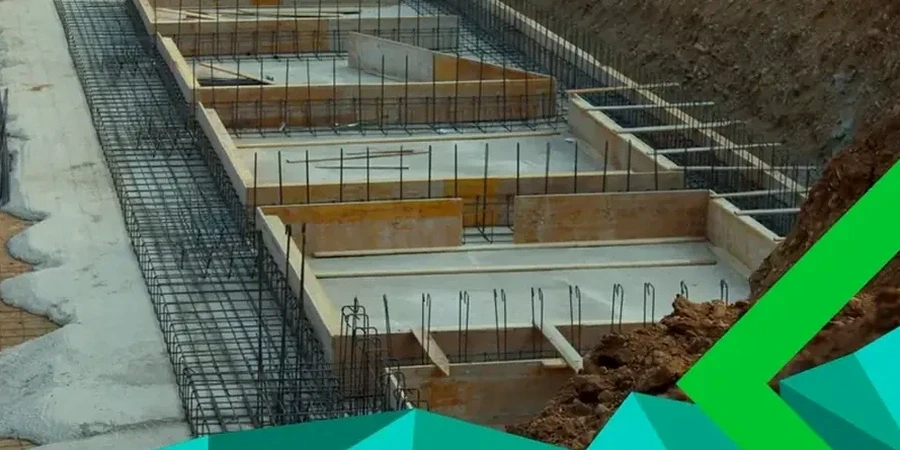
Critical ground factors in Peterborough Ontario
The rig we mobilise most often for shallow foundation investigations in Peterborough is a compact track-mounted continuous-flight auger drill with a hollow-stem option for sampling in unstable clay horizons. On a recent project near the Fleming College campus, we hit a groundwater zone at 2.8 metres that had not appeared on the desktop study. The auger flights started bringing up soft grey clay with visible organic staining, and the SPT blow counts dropped to 3. The crew switched to a Shelby tube sampling sequence to recover undisturbed specimens for triaxial testing. That single decision changed the foundation recommendation from a conventional strip footing at 1.5 metres to a deeper excavation with engineered granular fill replacement to competent till. Shallow foundations in Peterborough live or die by what the investigation reveals in the upper 5 metres. Skipping a few metres of sampling to save budget has resulted in litigation over foundation distress that costs orders of magnitude more than the original investigation would have. Our laboratory runs consolidated-undrained triaxial tests on every clay sample recovered from depths that will feel footing stress, because the difference between a friction angle of 26 and 30 degrees in a dense till translates directly to allowable bearing pressure and footing width.
Our services
Every shallow foundation design deliverable we produce for Peterborough projects includes a clear bearing capacity recommendation, a settlement estimate under service loads, and construction-phase verification requirements. The following three service components form the core of our approach.
Geotechnical Site Investigation for Footing Design
Targeted drilling, test pitting, and sampling across the building footprint to map soil variability. We log every borehole to CFEM standards and recover undisturbed samples from depths that will background stress increase from the foundation. Laboratory index testing (Atterberg limits, grain size distribution) and strength testing (triaxial or direct shear) supply the design parameters needed for bearing capacity and settlement calculations under NBCC 2020.
Bearing Capacity and Settlement Analysis
Calculation of allowable bearing pressure using both shear failure criteria (general and local shear per Terzaghi or Vesic) and serviceability limits. For clay sites east of the Otonabee, we run one-dimensional consolidation settlement estimates using oedometer-derived compression indices. On granular till sites, we apply Schmertmann’s method with strain influence factors calibrated to SPT and CPT data. Every report specifies the governing limit state so the structural engineer can proceed with confidence.
Construction-Phase Foundation Inspection
Inspection of footing subgrades prior to concrete placement, including hand penetrometer testing and visual classification to confirm that the bearing stratum matches the design assumptions. On sites with variable fill or weathered rock, we perform plate load tests at footing elevation to verify modulus of subgrade reaction. We also inspect reinforcement placement, keyway dimensions, and foundation drainage systems per Ontario Building Code requirements.
Common questions
What is the typical cost range for a shallow foundation geotechnical investigation in Peterborough?
For a single-family residential or small commercial lot in Peterborough, a complete investigation including borehole drilling, laboratory testing, and a foundation design report typically falls between CA$2,550 and CA$4,800. The range depends on access conditions, number of boreholes required, and whether specialty testing such as triaxial or consolidation is needed for clay-rich sites on the east side of the city.
How deep do footings need to be in Peterborough to avoid frost heave?
The Ontario Building Code requires a minimum footing depth of 1.2 metres below finished grade for frost protection in the Peterborough area. On exposed sites or where the foundation is unheated during winter months, we often recommend 1.5 metres minimum. The depth must also extend below any topsoil, fill, or disturbed material to reach competent native soil. For heated structures on well-drained granular soils, 1.2 metres is generally sufficient if the foundation perimeter is insulated.
What soil conditions in Peterborough cause the most foundation problems?
The most problematic condition we encounter is the transition zone between the limestone plateau and the deep clay plains. In these areas, a single building footprint can span rock, stiff till, and soft clay within 20 metres. Differential settlement across these transitions is the primary cause of foundation distress. Buried organic silt lenses, common in the old river channels of the Otonabee floodplain, also cause localised settlement that standard borehole spacing can miss. We address this by combining closely spaced dynamic cone tests with targeted sampling at suspect depths.
When is a shallow foundation not suitable and a deep foundation required instead?
A shallow foundation becomes unsuitable when the net allowable bearing pressure at a reasonable footing width and depth cannot support the structural loads without exceeding settlement limits—typically 25 mm total and 19 mm differential for conventional buildings. In Peterborough, this most often occurs on thick deposits of soft lacustrine clay where consolidation settlement under strip footings would exceed 40 to 50 mm. It also applies where the water table is within 1 metre of the proposed footing elevation and dewatering is impractical. In these cases, we evaluate alternatives such as ground improvement, a mat foundation to spread loads, or a transition to deep foundations on driven piles socketed into the underlying till or bedrock.