When the drill rig arrives on a Peterborough site, we usually start by setting up the dynamic cone penetrometer right over the stripped subgrade. This is the first real look at what the asphalt layers will actually sit on. The city sits on a mix of limestone bedrock and glacial till, but the real challenge is the shallow water table along the Otonabee River corridor. We have seen pavement designs fail within three seasons because the subgrade modulus was assumed instead of verified. A proper CBR road investigation gives you the soaked strength values you need before you spec the granular base. Our team runs these tests year-round, even when the frost is still coming out of the ground in April, because waiting for the "perfect" window is not always an option for contractors working under tight municipal deadlines.
In Peterborough, the freeze-thaw cycle is the pavement's real test; if your subgrade holds water, your asphalt will not hold its shape.
Scope of work in Peterborough Ontario
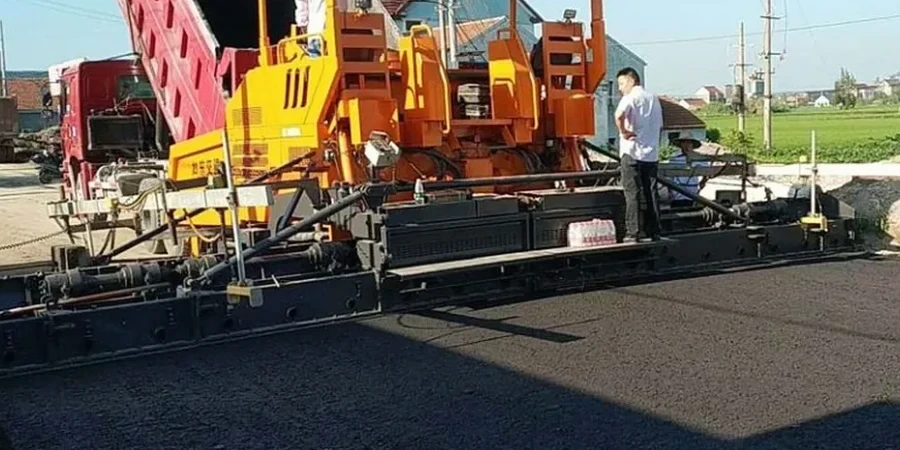
Critical ground factors in Peterborough Ontario
The Ontario Building Code (OBC) and OPSS 1010 set the baseline, but for flexible pavement design in Peterborough, the critical reference is the MTO Pavement Design and Rehabilitation Manual. The city sits in a region where the frost penetration can exceed 1.5 metres, and ignoring this means the design is non-compliant with the very basic NBCC climatic requirements. The biggest risk is differential heave caused by pockets of frost-susceptible soil that were never identified during the site investigation. We have logged boreholes where the till transitions from clean sand to laminated silt over a distance of ten metres. If you design the entire parking lot or road segment based on the best material encountered, the sections over silt will fail. The cost of a forensic investigation and a partial reconstruction is easily triple what the original site investigation and a proper flexible pavement design would have cost, not to mention the reputational damage with the city's engineering department.
Our services
We support civil consultants and paving contractors across Peterborough with a focused scope of geotechnical work that feeds directly into the pavement design report. Our approach is always tied to the specific site conditions, from the drumlins north of the city to the floodplain south of Lansdowne Street. The two core investigations we deliver for flexible pavement design are:
Subgrade Characterization for Flexible Pavement
We drill or excavate test pits to sample the native subgrade across the proposed road or parking area. The soil is tested for moisture content, grain size distribution, Atterberg limits, and soaked CBR. We supply the design resilient modulus (Mr) and identify any frost-susceptible zones that need sub-excavation or additional granular thickness.
Pavement Structural Design Verification
Using the site-specific subgrade data, we calculate the required structural number (SN) for the expected traffic loading. We then confirm the granular base and asphalt layer thicknesses meet MTO and municipal standards. If the client provides Falling Weight Deflectometer (FWD) data, we back-calculate the in-situ layer moduli to refine the overlay design.
Common questions
What is the typical cost for a flexible pavement design investigation in Peterborough?
For a standard commercial parking lot or a short road segment in Peterborough, the investigation cost usually runs between CA$2,440 and CA$6,150. The range depends on the number of boreholes or test pits required, the depth of the investigation, and the specific lab tests needed, like soaked CBR versus a full suite of frost-susceptibility tests.
How deep do you need to investigate for a flexible pavement design in the Kawarthas?
We typically go at least 2 metres below the proposed subgrade elevation. In Peterborough, the design frost depth is 1.5 metres, so we need to sample and identify the soil well below that line to confirm there are no deeper pockets of frost-susceptible silt or clay that could contribute to long-term heave.
Can you design a pavement structure for an unassumed road in Peterborough County?
Yes, we work with developers on subdivision roads that will eventually be assumed by the municipality or the county. We design the flexible pavement structure to meet the specific OPSS and local municipal standards, and we can supply the required supporting geotechnical report for the assumption process.
What is the difference between soaked and unsoaked CBR for pavement design?
The soaked CBR is the critical value for flexible pavement design in Peterborough. It represents the worst-case scenario, typically spring thaw conditions when the subgrade is saturated and at its weakest. We soak the compacted soil samples for 96 hours per ASTM D1883. Using an unsoaked value is a common error that leads to an under-designed pavement section that will rut prematurely.