Peterborough's landscape was shaped by the last ice age, leaving behind a complex mix of glacial till, limestone bedrock, and the sandy deposits of the old Kawartha river channels. When you break ground here, the soil doesn't keep secrets for long — groundwater seeps through fractured rock, and the stiff clay left by Lake Jackson's predecessor can lose strength fast once exposed. Monitoring an open excavation isn't just about checking boxes on a safety sheet; it's about reading the ground's reaction in real time before a tenth-of-an-inch movement cascades into a costly repair. The team brings a practical, data-driven approach to geotechnical excavation monitoring across Peterborough County, from the downtown core near the lift lock to the new subdivisions pushing into Douro-Dummer's silty margins. In a city where shoring often butts up against century-old masonry, combining continuous inclinometer readings with manual crack surveys becomes the common-sense baseline rather than an optional extra. Pairing this vigilance with a test pit investigation early on often reveals exactly which lens of loose sand might need tighter support spacing.
In Peterborough's glacial terrain, the difference between a successful deep dig and a costly shutdown often comes down to catching a 3-millimeter shift before the morning toolbox talk.
Scope of work in Peterborough Ontario
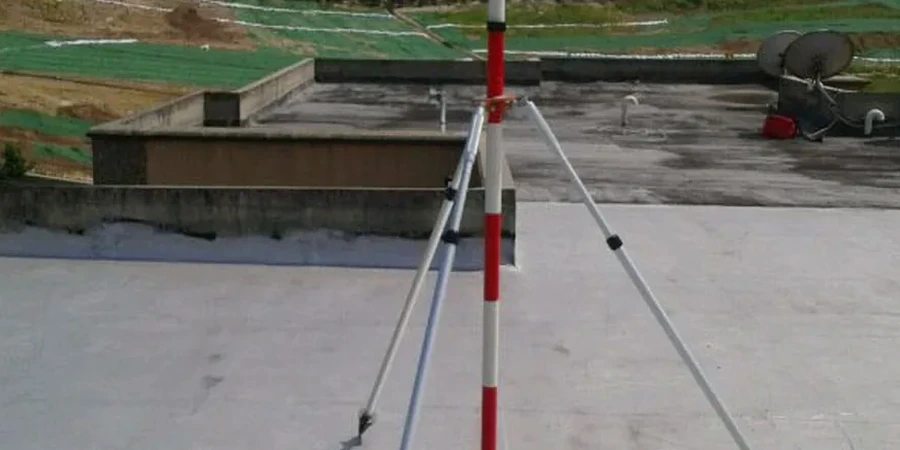
Field demonstration
Critical ground factors in Peterborough Ontario
Not every excavation in Peterborough faces the same risk. A site up in the Armour Hill area, sitting on a dense till cap over limestone, behaves nothing like a dig near Jackson Creek's alluvial plain, where water-bearing silts can destabilize a trench wall in the space of an afternoon. Downtown, the concern shifts again — vibration from an excavator's breaker hammer can travel through limestone bedrock and crack a heritage facade two blocks away, triggering a claim under the Ontario Heritage Act before the day's work is finished. The most expensive problems aren't always collapses; they're the settlement-induced cracks in adjacent buildings that slowly grind a project to a halt. The monitoring program acts as an early warning system, correlating rainfall events with inclinometer drift and piezometric spikes so the superintendent can adjust dewatering or install an extra row of tiebacks before a condition becomes a failure. Contractors who treat monitoring as a reactive check on a clipboard inevitably spend more on remediation than those who use the data proactively.
Our services
The excavation monitoring program scales to the specific conditions of each Peterborough site, from small utility trenches to multi-level underground parking structures. The following service packages represent the typical deployment but are always tailored to the geotechnical baseline report and the shoring designer's performance criteria.
Shoring Performance Monitoring
Continuous inclinometer chains behind soldier piles or sheet piling, paired with optical targets on walers and neighboring buildings. We establish pre-construction condition surveys and set yellow/red trigger levels based on the shoring engineer's allowable deflections, providing daily plots that the site team can act on immediately.
Vibration & Crack Control
Seismograph deployment for rock breaking or pile driving near sensitive structures, with real-time SMS alerts if peak particle velocity approaches the limit specified for the building class. Manual crack gauge readings on adjacent properties are logged in a dated photographic database that holds up under dispute resolution.
Groundwater Drawdown Tracking
Standpipe and vibrating-wire piezometer networks that measure the actual radius of influence of the dewatering system. This data verifies that the drawdown stays within the predicted envelope, protecting neighboring wells and preventing consolidation settlement in compressible silt layers common to the Kawartha lowlands.
Common questions
What does a typical excavation monitoring program cost for a commercial project in Peterborough?
For a standard commercial excavation lasting three to four months, monitoring programs in Peterborough generally range from CA$1,250 to CA$3,530, depending on the number of inclinometer stations, survey prisms, and the frequency of site visits. A small utility trench with just crack gauges falls at the lower end, while a deep shored cut downtown with vibration monitoring, multiple piezometers, and daily reporting sits at the upper end. We supply a fixed-scope proposal after reviewing the shoring drawings and geotechnical report so there are no surprises mid-project.
How quickly can the monitoring team respond if an inclinometer shows movement above the threshold?
The cloud-based dashboard sends an automated alert the moment a sensor exceeds its preset trigger value. Our field engineer reviews the data within the hour, and if the trend is accelerating rather than a one-off spike, we can have a technician on site the same day to verify readings manually and walk the excavation with the superintendent. In Peterborough, the combination of clay layers and spring melt can produce rapid changes, so we maintain instrument stock locally to add extra monitoring points without waiting for shipping from Toronto.
Is vibration monitoring really necessary for a small excavation next to an old building downtown?
Yes, and it's often the most cost-effective insurance on the project. Peterborough's downtown has many unreinforced masonry buildings from the late 1800s that are highly susceptible to vibration-induced cracking, even from a modest excavator-mounted hammer working in limestone. A single seismograph recording peak particle velocity provides objective evidence that your work stayed within the Ontario Building Code's vibration limits, which is far cheaper than defending against a third-party damage claim without any data to back you up.